Clinical Example: Staged Flexor Tendon Reconstruction
| The results of repair or
reconstruction of flexor tendon injuries remains frustratingly
unpredictable. This series demonstrates a technique for flexor tendon
and tendon sheath reconstruction. |
| Click on each image for a larger picture |
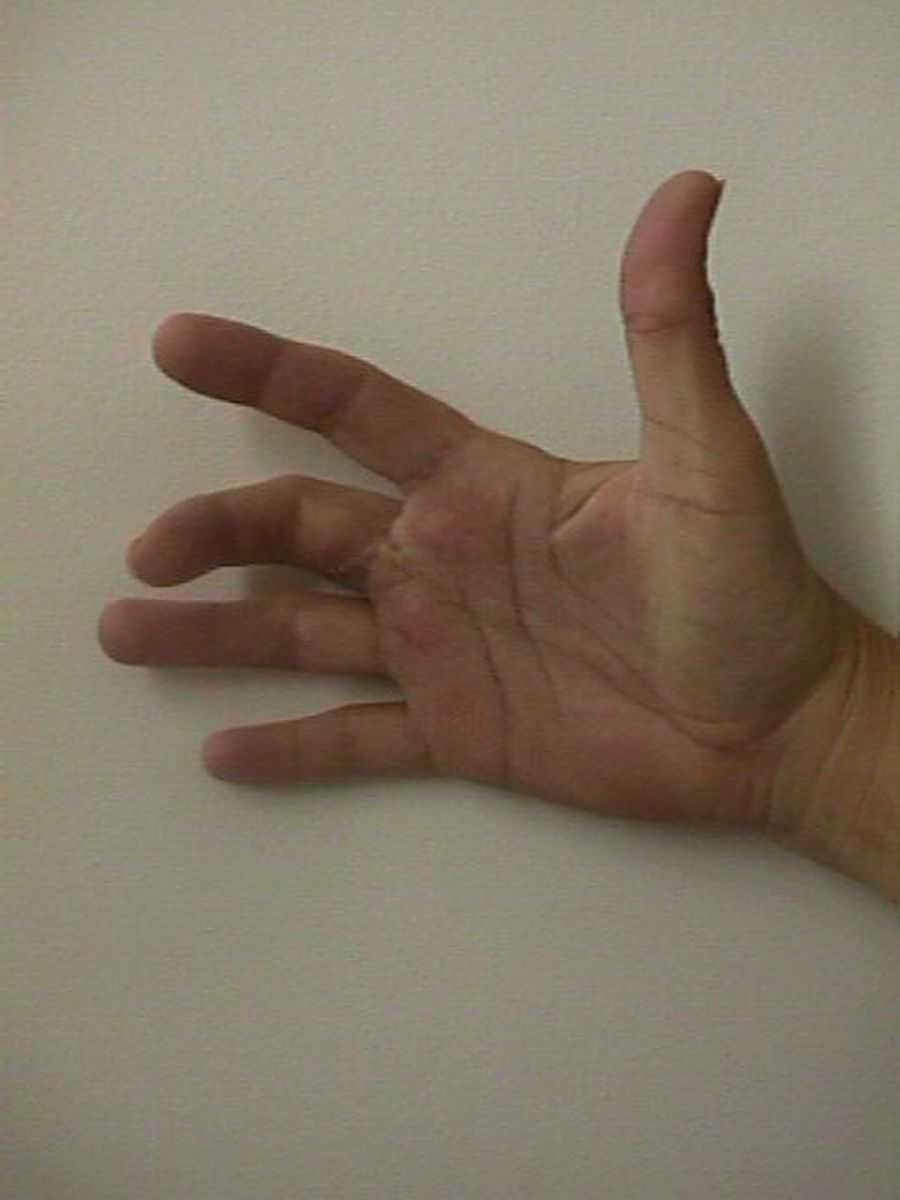
| This patient had undergone
two prior procedures elsewhere for flexor tendon injuries from a
laceration in the proximal phalanx of the middle finger. There was full
passive but no active flexion and fixed flexion contractures of both
the proximal and distal interphalangeal joints. |
| At exploration, neither A2
nor A4 pulleys could be identified. PIP and DIP capsulotomies were
required to restore passive extension. Reconstruction was undertaken
with
a silicone tendon spacer, pulley reconstruction and preliminary flexor
digitorum profundus to superficialis tendon juncture. |
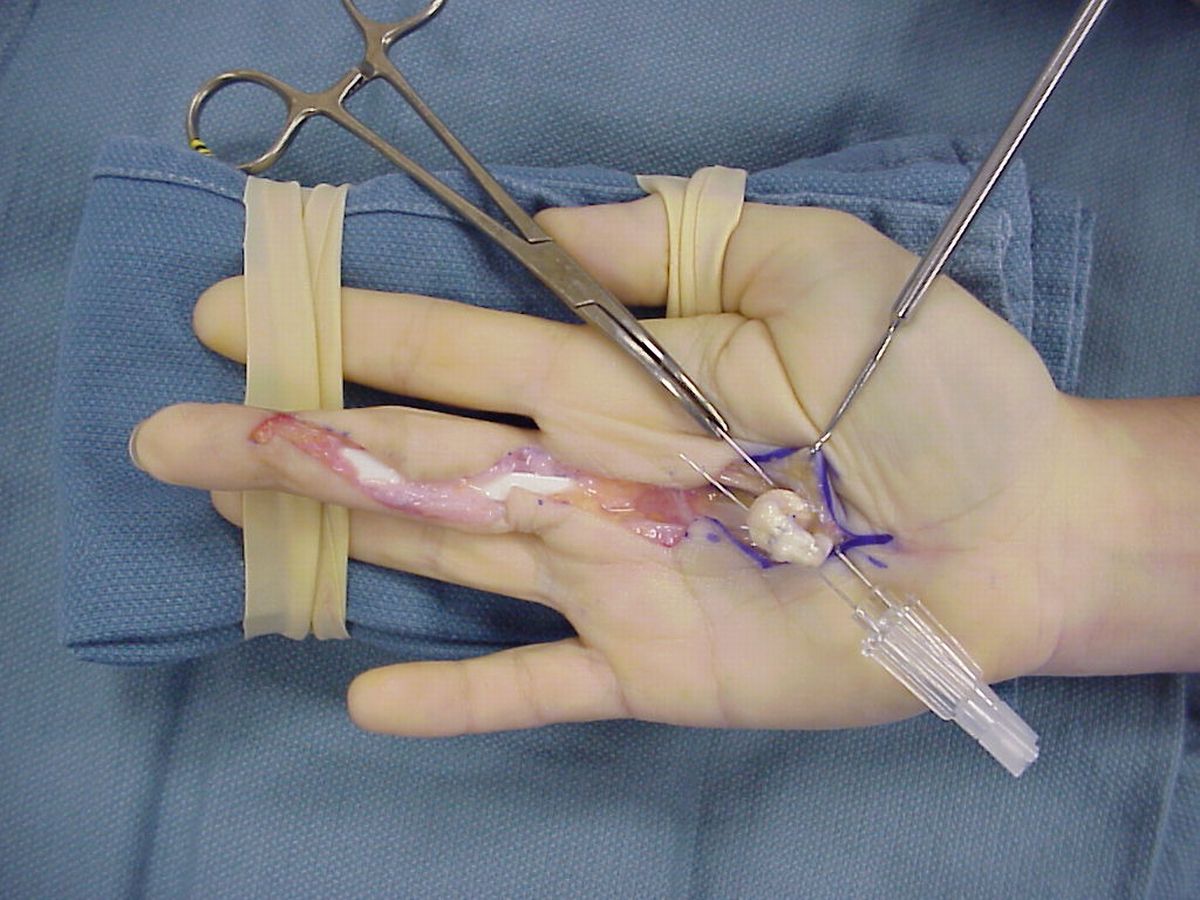
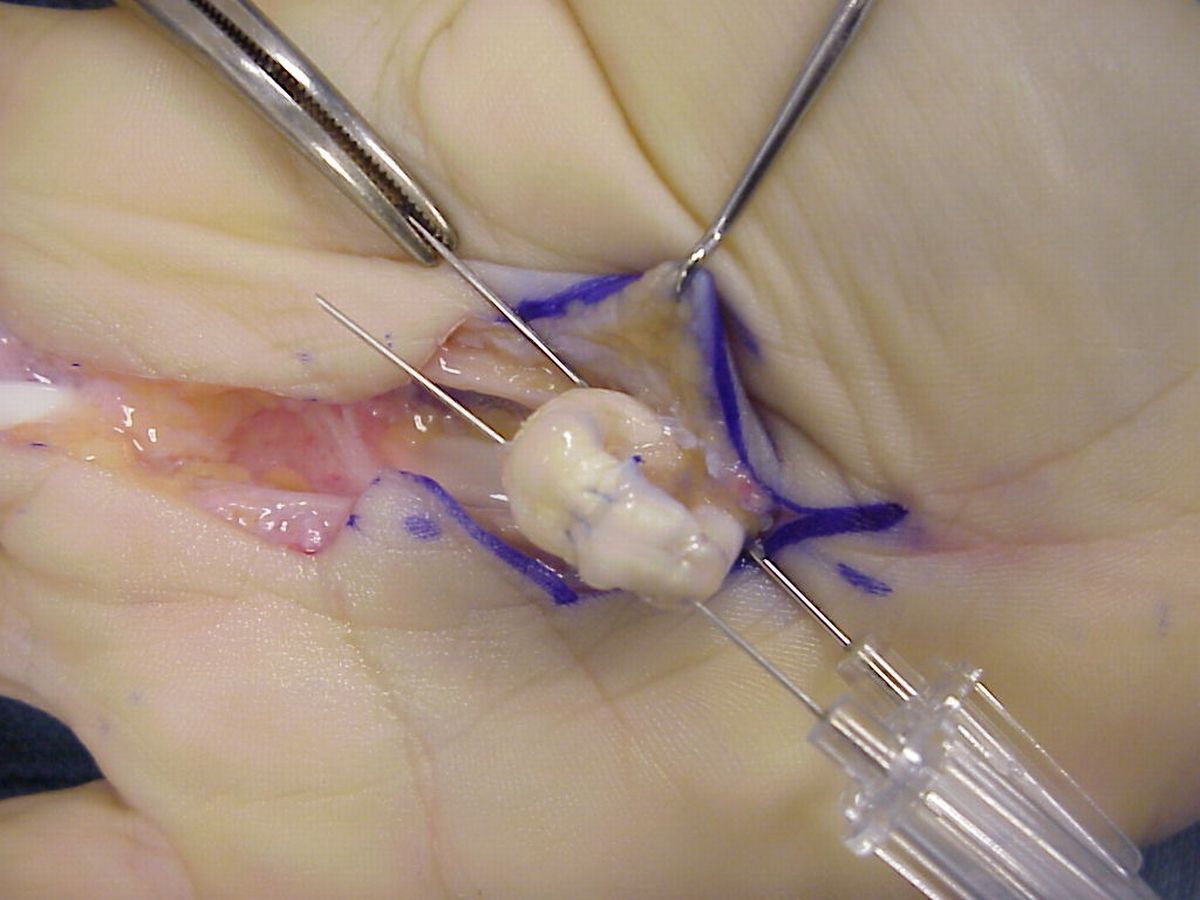
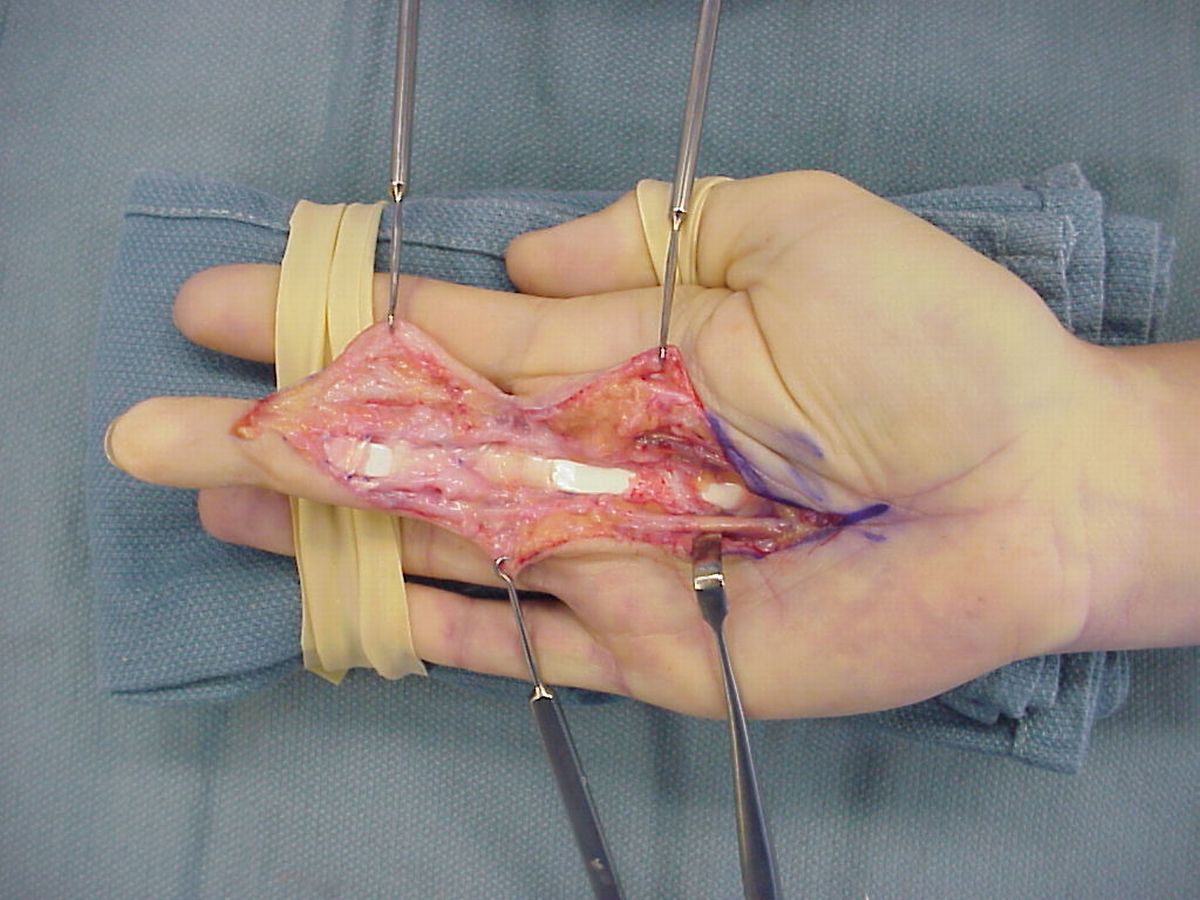
| The deep needle is
delivering the tendons into the field. The superficial needle is
maintaining an end to end orientation so that the tendon ends were
approximated without angulation. |
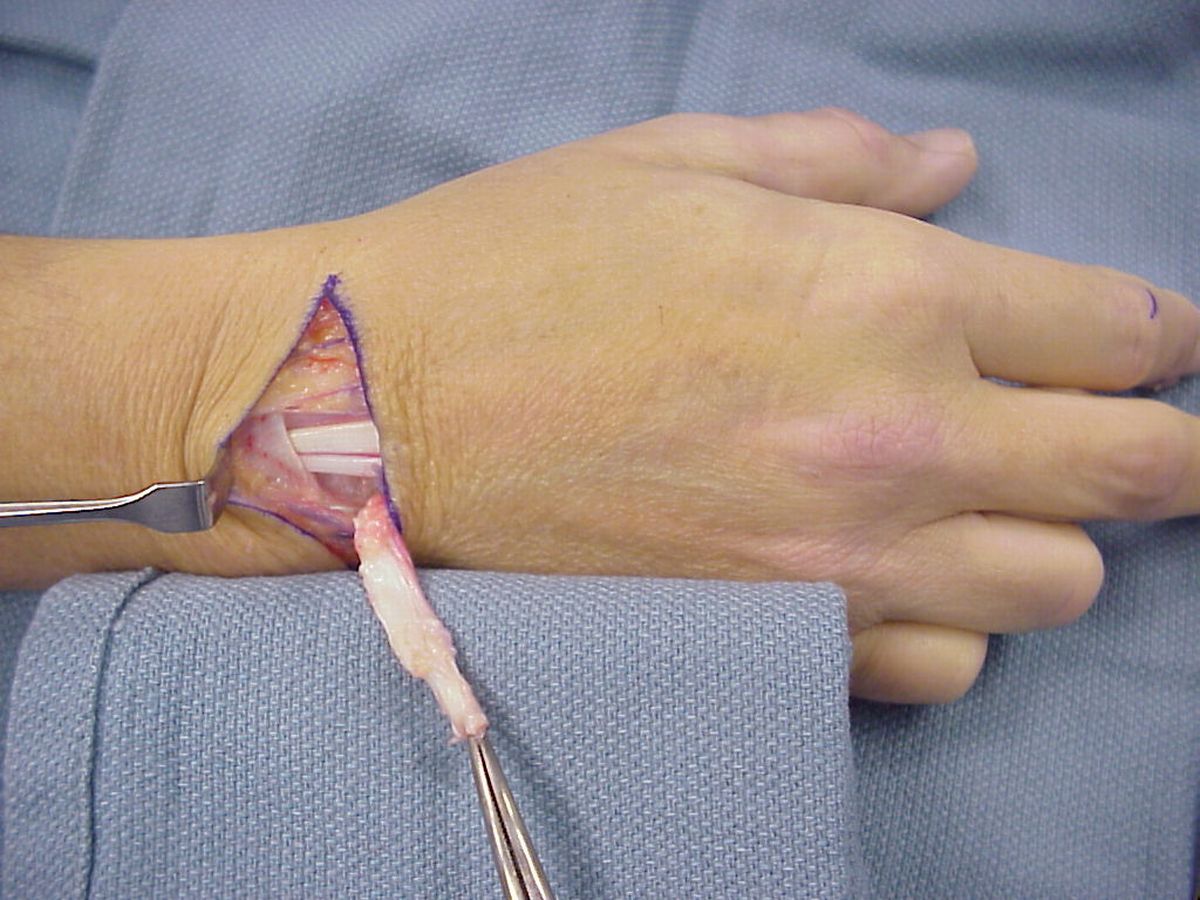
| A strip of extensor
retinaculum was used as a graft for pulley reconstruction. |
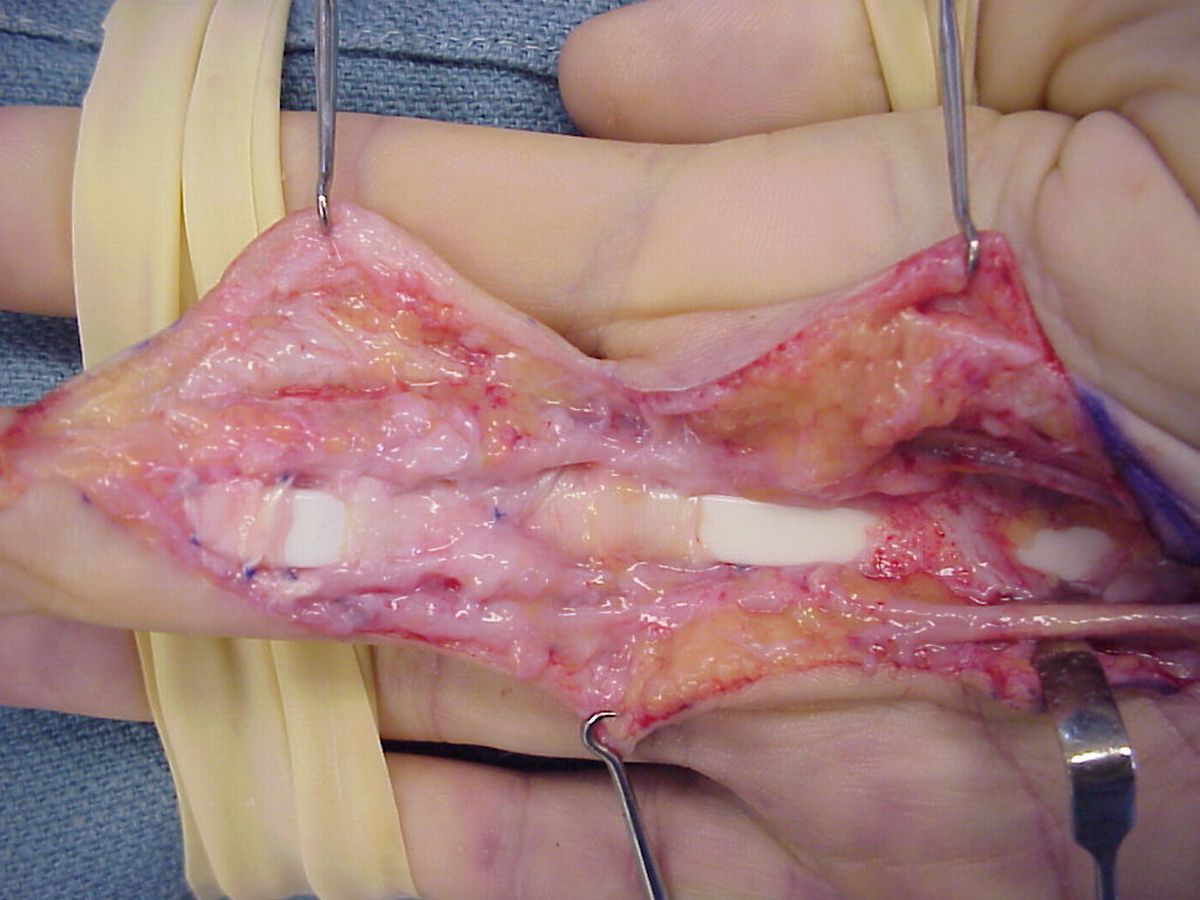
| The retinacular graft was
passed twice around the proximal phalanx in an effort to recreate the
entire A2 pulley. |
| The A4 pulley was
reconstructed by bridging the graft to the remaining attachments of the
A4 pulley. |
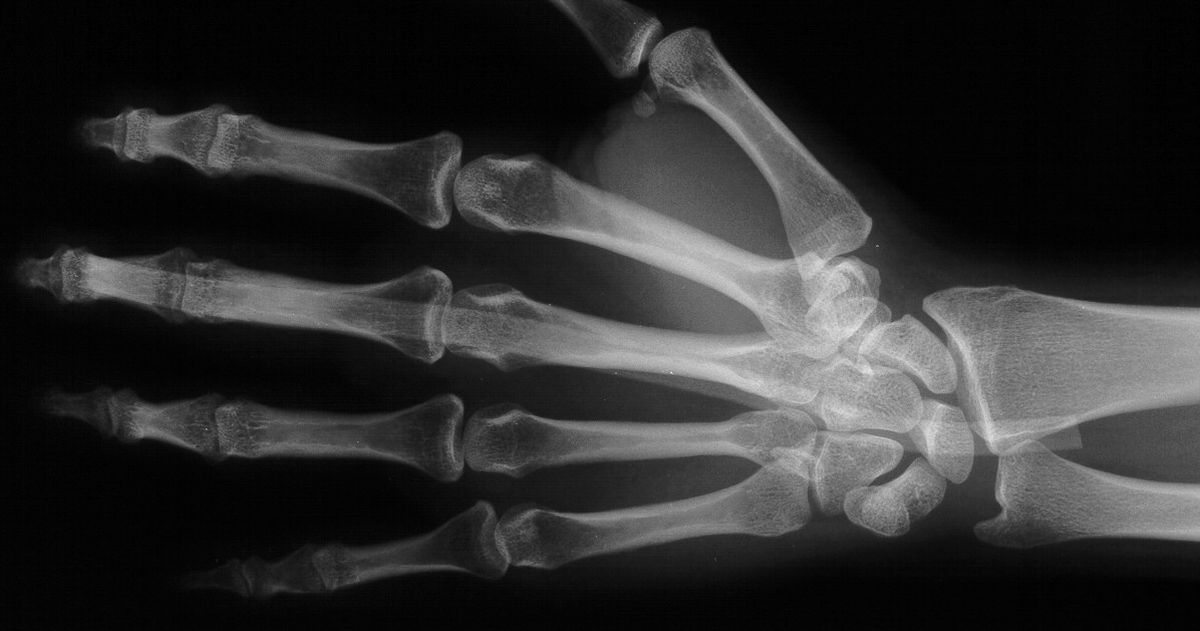
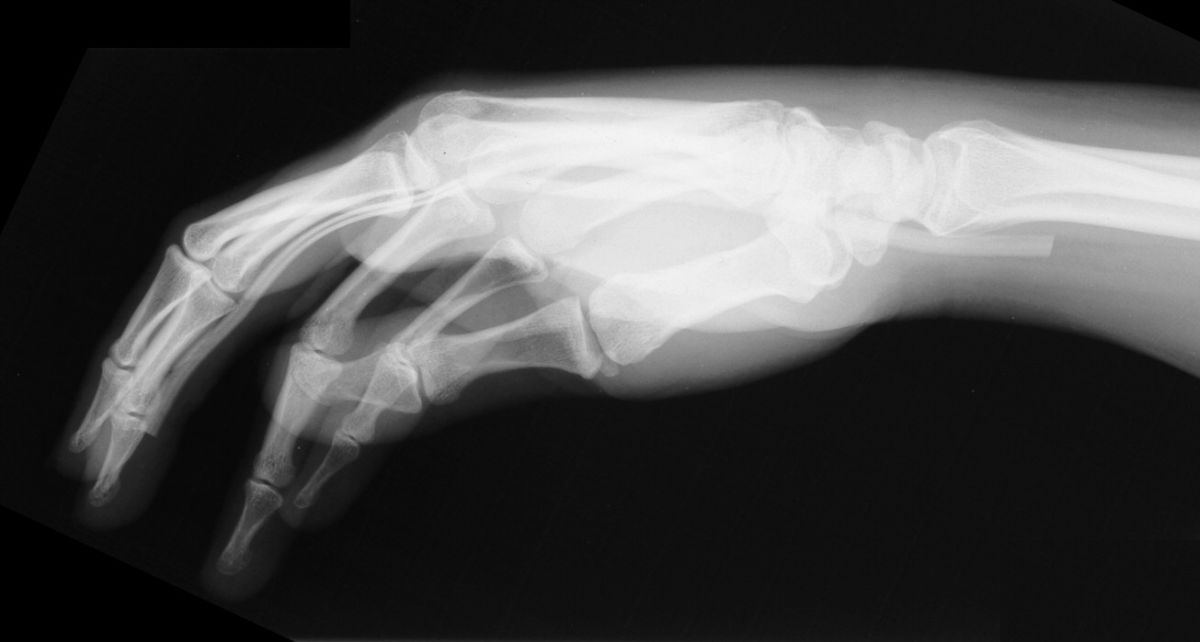
| Radiographs demonstrating
proper tendon spacer position and no bowstringing. |
| Second stage, three months
later. The tendon spacer and the tendon-tendon juncture are exposed: |
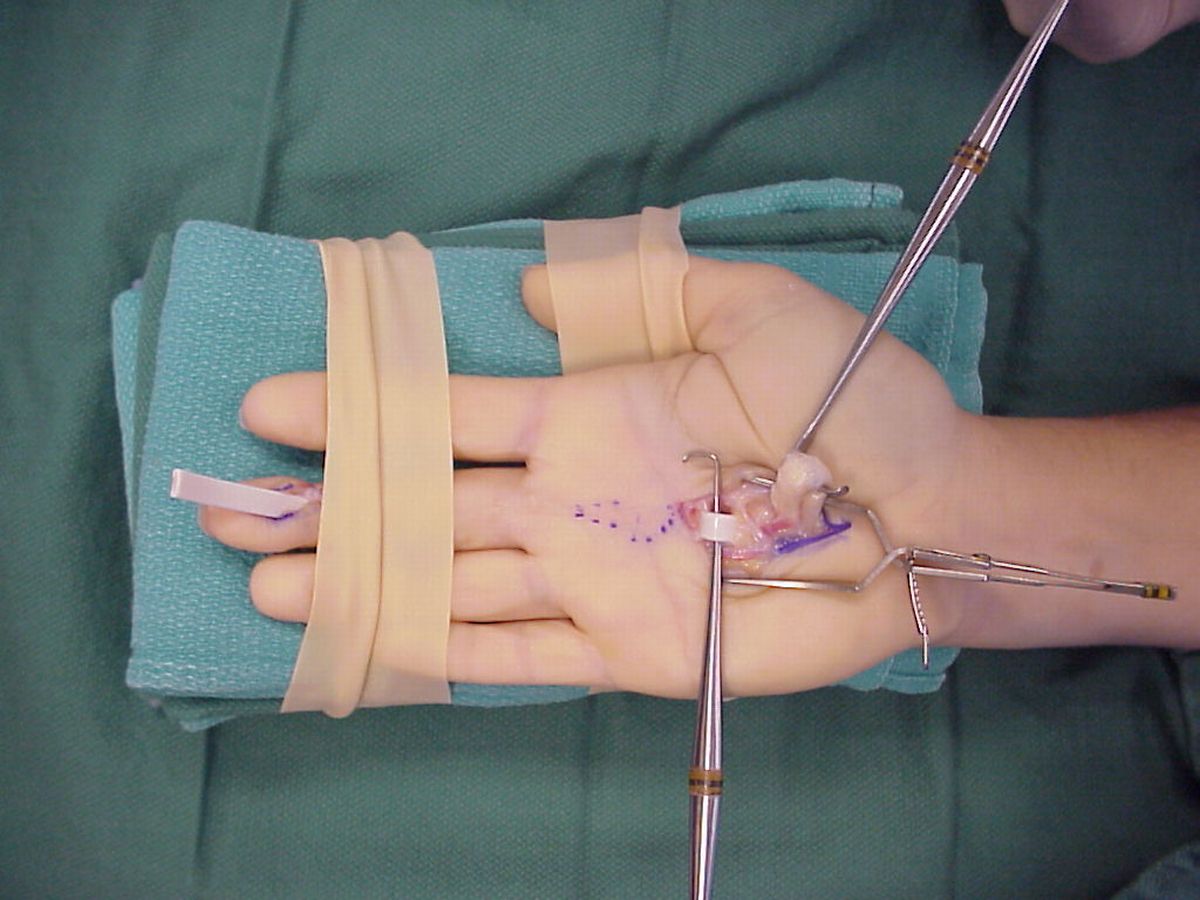
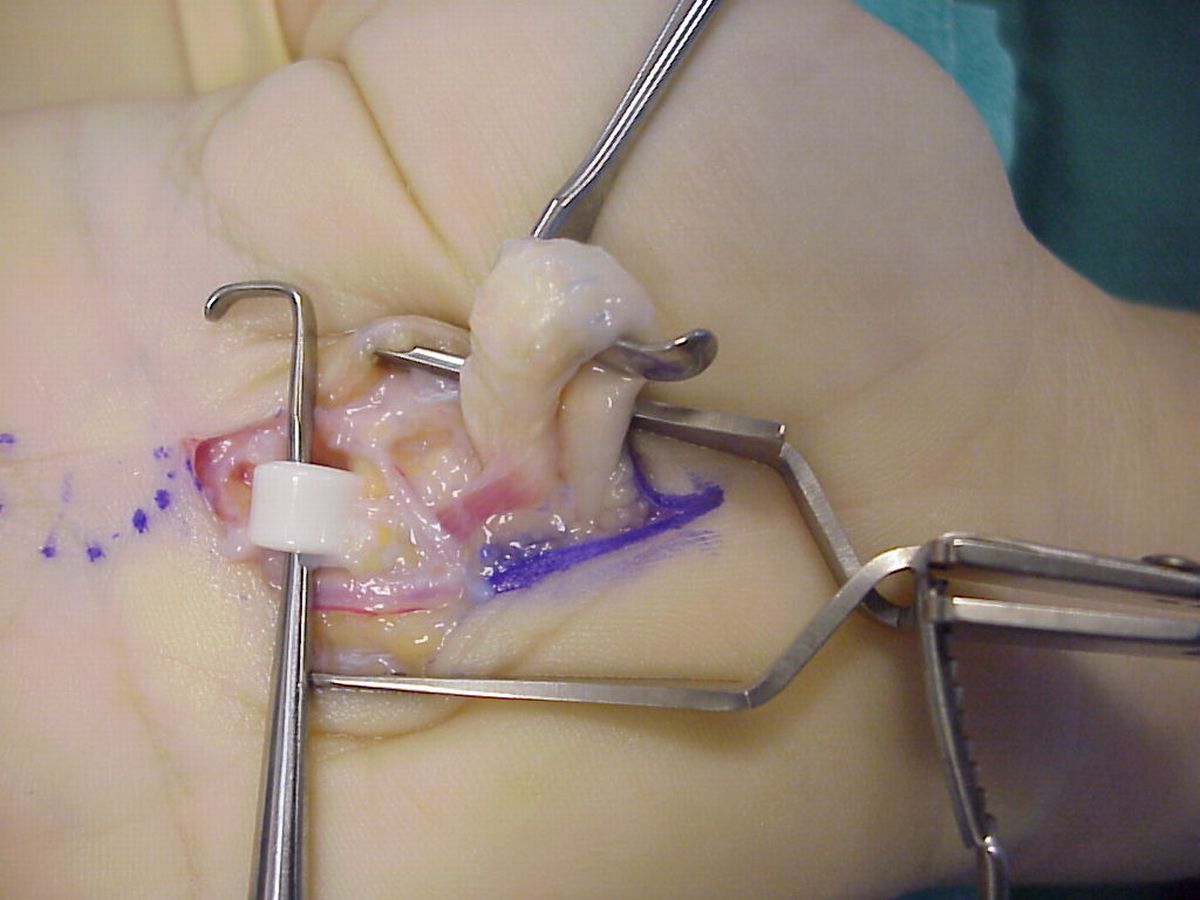
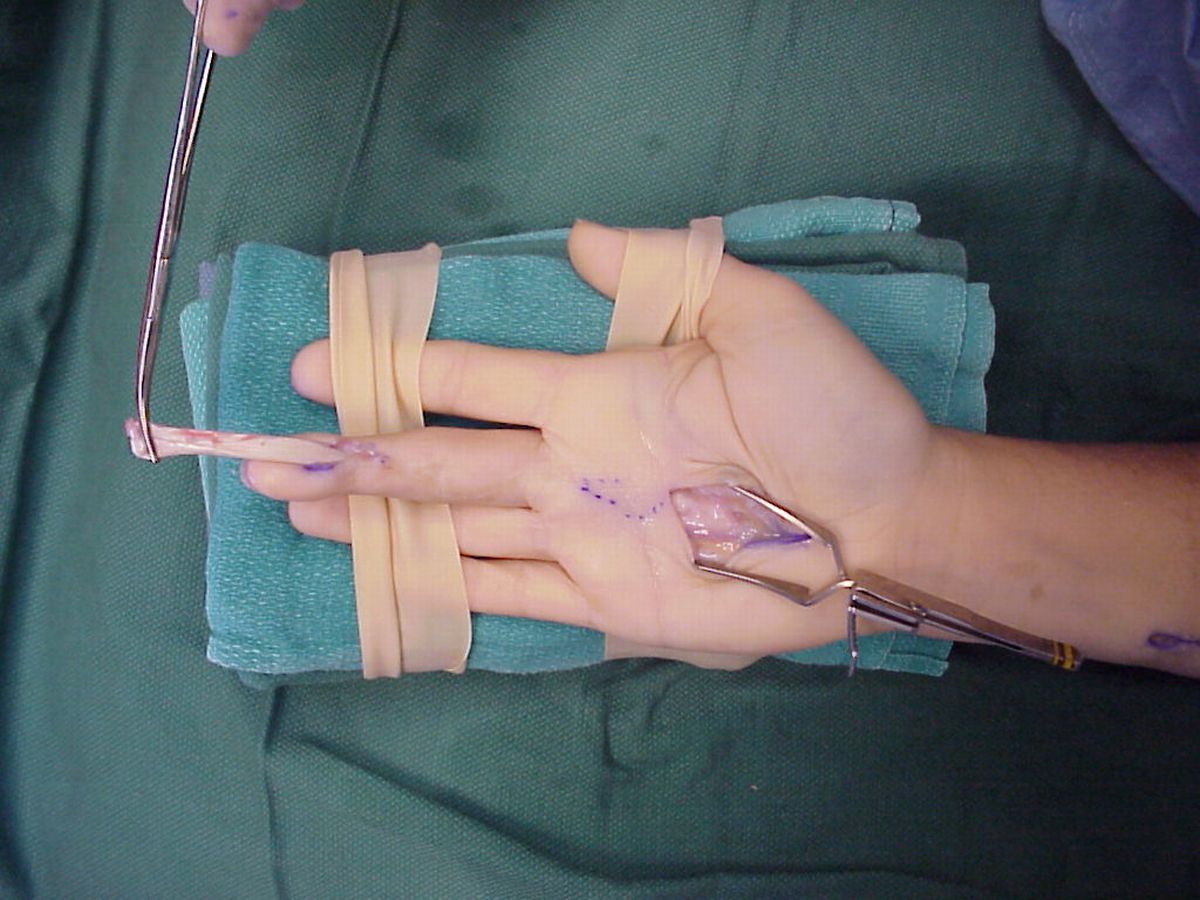
| The FDS tendon was divided
in the forearm. The proximal stump was delivered into the palm
wound, sutured to the tendon spacer and pulled out the fingertip. |
| Tension was adjusted to
match the cascade of the adjacent fingers. |
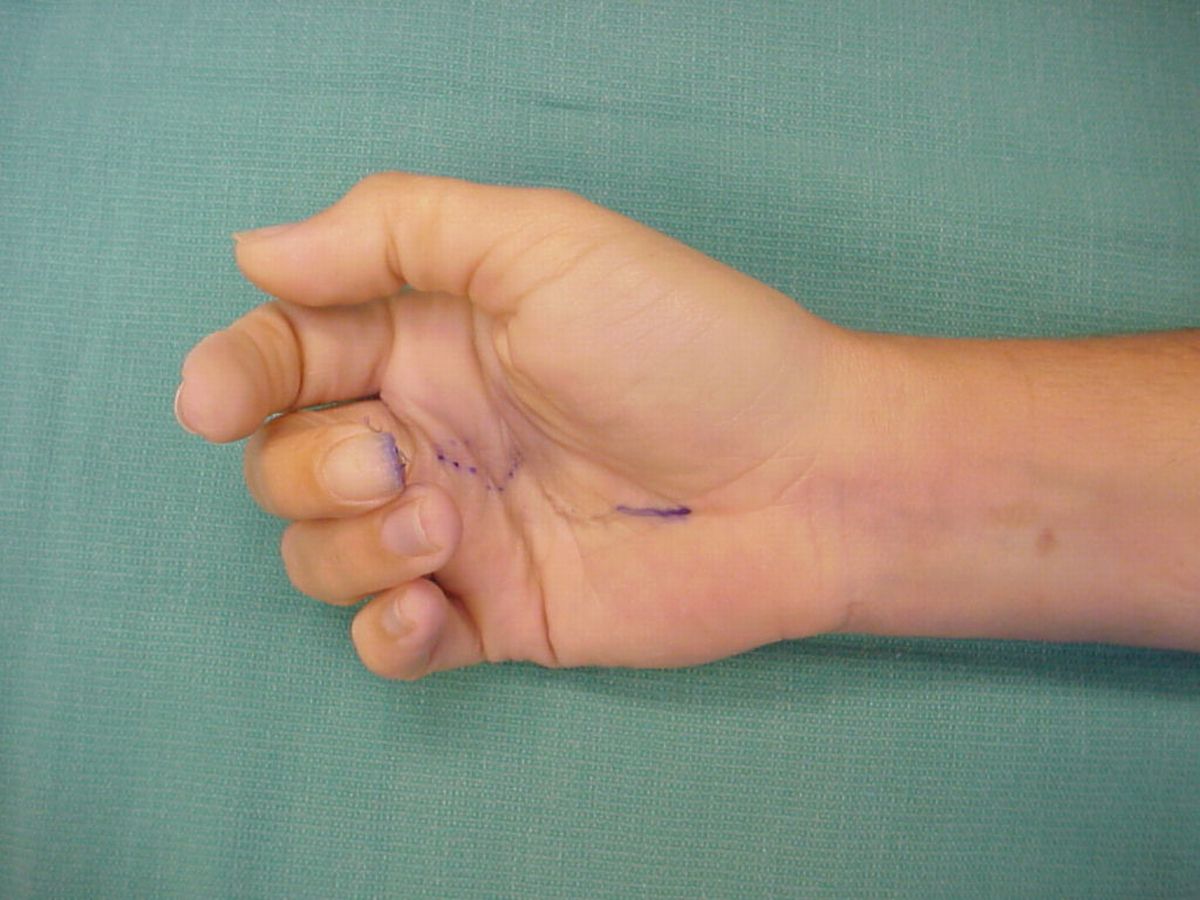
| The distal tendon graft was
brought out the fingertip, and sutured to the old FDP stump. |
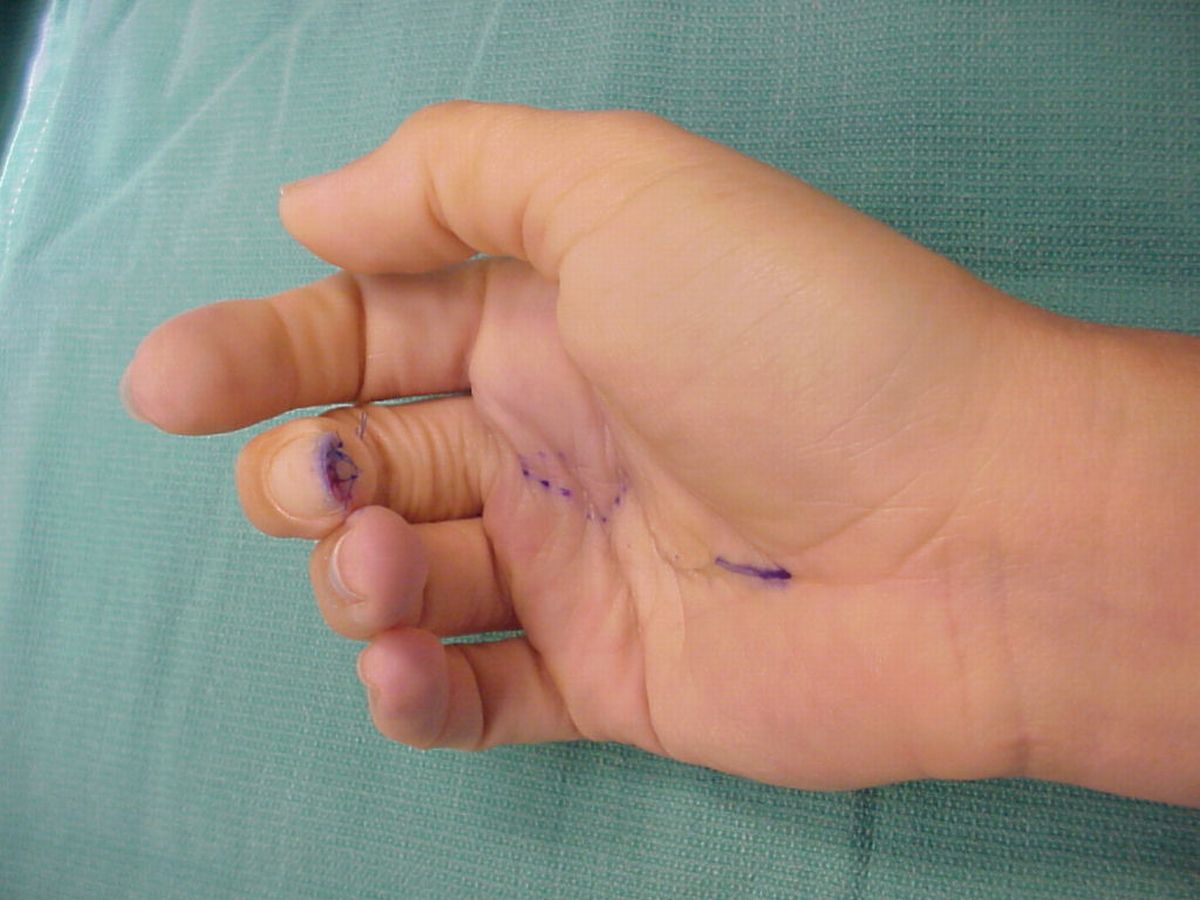
| That's the easy part! Now it's up to a motivated patient and a dedicated therapist to make it work. |
| Search
for... Flexor tendon reconstruction pulley reconstruction |
Case Examples Index Page | e-Hand home |